Newsletter Subscribe
Enter your email address below and subscribe to our newsletter

 ByJohn A
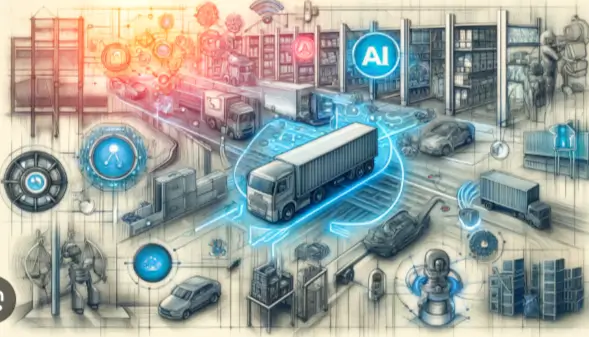
Artificial intelligence enhances delivery reliability by forecasting demand and triggering proactive replenishment to prevent stockouts. It enables dynamic routing and scheduling that adapt to real-time conditions, reducing deviations in expected delivery windows. Real-time visibility and proactive alerts keep customers informed, lowering uncertainty. Autonomous and assistive logistics balance automation with human oversight, selecting the appropriate approach for each scenario. The result is tighter delivery windows and improved on-time performance, prompting further consideration of AI’s role in logistics optimization.
AI-driven demand forecasting analyzes historical sales, seasonality, promotions, and external factors to predict future demand with quantified confidence. The approach emphasizes demand sensing to detect shifts early, enabling proactive inventory adjustments. Accurate forecasts drive stockout prevention by aligning replenishment cycles with real-time signals, reducing safety stock while preserving service levels. This data-driven discipline supports freedom through reliable product availability and operational resilience.
Dynamic routing and scheduling enable delivery windows to be tightened by continuously recalibrating vehicle assignments, routes, and departure times in response to real-time data.
The approach demonstrates measurable gains: reduced total travel time, improved on-time performance, and lower fuel consumption.
Dynamic routing supports scheduling optimization by reallocating resources proactively, ensuring milestones align with demand patterns while preserving operational autonomy and customer freedom.
See also: rapidhomedirect
Real-time visibility and proactive customer communication enable stakeholders to monitor delivery progress with precision and timeliness.
Real time tracking data informs operational decisions, while proactive updates reduce uncertainty and variance in ETA communication.
Clear dashboards translate demand forecasting into actionable alerts, enabling proactive issue mitigation.
This approach preserves autonomy, supports informed choice, and sustains trust across channels throughout the supply chain.
Autonomous and assistive logistics synthesize automation with human oversight to optimize delivery outcomes, selecting the most appropriate modality based on task complexity, risk tolerance, and available data quality.
This framework emphasizes autonomous prioritization to streamline scheduling and route choice, while assistive navigation supports drivers in dynamic environments.
A disciplined deployment reduces latency, enhances reliability, and preserves operator autonomy in complex networks.
AI weather forecasting informs routing adjustments and contingency prioritization; it enables dispatch resilience by preemptively reallocating resources, rerouting shipments, and issuing proactive alerts, reducing disruption exposure while preserving delivery autonomy and operational transparency for stakeholders.
AI can predict last-mile bottlenecks before they occur, enabling proactive mitigation. By analyzing real-time and historical data, it identifies predictive bottlenecks and supports route reallocation, improving resilience while preserving operational freedom and efficiency for delivery networks.
Data privacy measures protect customer location info through rigorous access controls, minimal data retention, and continuous audits; location encryption secures data in transit and at rest. The approach is proactive, data-driven, and aligns with audiences seeking freedom and trust.
AI solutions exhibit variable scalability for small businesses, with notable scalability challenges including integration complexity and cost. Yet, data-driven strategies enable measured small business adoption, emphasizing modular architectures, cloud-enabled tools, and proactive governance to sustain freedom-focused growth.
AI systems do not require human intervention for every delay; they autonomously detect, decide, and adapt. However, AI governance and ongoing model retraining ensure accountability, safety, and continuous improvement for proactive, data-driven delivery optimization.
Artificial intelligence sharpens delivery reliability by aligning demand forecasts with inventory decisions, reducing stockouts and backorders. Dynamic routing and scheduling continuously recalibrate plans as conditions shift, shrinking delivery windows and travel time. Real-time visibility and proactive communications lower uncertainty and bolster customer trust. Autonomous and assistive logistics optimize resource use while preserving appropriate human oversight. In essence, AI acts as a precise navigator, guiding logistics toward on-time performance with the steadiness of a well-tuned compass.