Newsletter Subscribe
Enter your email address below and subscribe to our newsletter


 ByJohn A
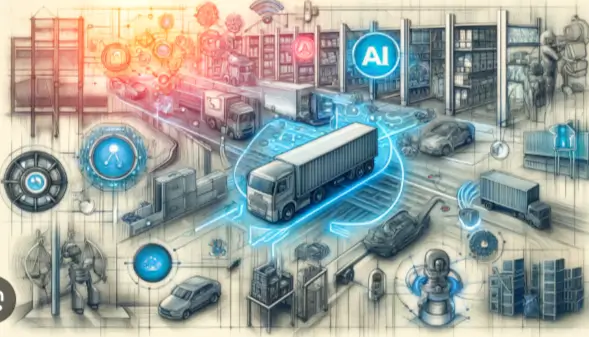
Artificial intelligence enables cloud cost reduction through real-time telemetry analysis and historical data. It automates rightsizing and scheduling, lowers idle capacity, and improves routing across regions, instances, and services. Metrics like utilization, waste, and ROI inform actions and governance. Real-time alerts and anomaly detection provide transparency. While these measures quantify savings and performance, the true test lies in sustaining efficiency as workloads evolve and budgets tighten. The next step? a disciplined, data-driven implementation.
AI-driven cost optimization in the cloud leverages real-time telemetry and machine learning to identify inefficiencies and automate spending reductions. The approach emphasizes cost forecasting to predict future spend and allocate budgets accordingly, while monitoring utilization patterns. It enables workload reallocation across platforms, reducing idle capacity and improving efficiency. Metrics focus on savings, burn rate, and return on investment for informed freedom-driven decisions.
Automating rightsizing and scheduling is a practical core lever for cutting waste in cloud environments, leveraging real-time usage data to adjust resource allocations and timing.
The approach yields measurable improvements: reduced idle capacity, higher utilization, and predictable costs. Metrics show automated rightsizing and intelligent scheduling cut waste by percentiles, enabling freedom-focused teams to scale confidently while preserving performance and resilience.
See also: rapidhomedirect
Smart routing uses AI to select optimal regions, instances, and services based on real-time and historical telemetry. The approach emphasizes AI routing as a decision engine, delivering regional optimization and cost-aware instancing. Metrics track latency, utilization, and error rates, enabling precise service placement. Decisions balance reliability and price, supporting freedom-minded teams with transparent, data-driven resource allocation.
Real-time alerts, anomaly detection, and ROI tracking convert cloud-cost strategies into measurable outcomes.
The approach emphasizes continuous monitoring, transparent dashboards, and precise thresholds.
Real time anomaly detection enables rapid fault isolation, while ROI forecasting metrics quantify savings versus investment.
Decisions rely on objective signals, enabling freedom to scale confidently.
Metrics-driven workflows translate alerts into actionable cost optimizations and accountable financial outcomes.
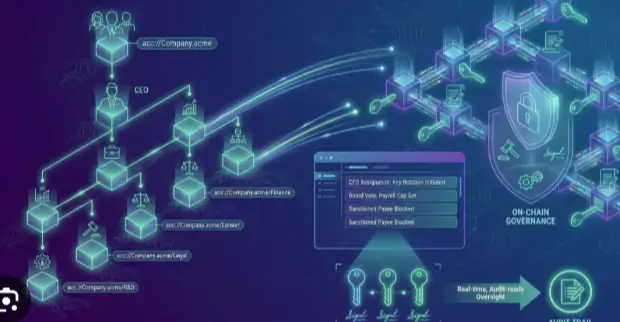
AI enforces data sovereignty by region-specific controls, encryption, and access audits, ensuring data never traverses forbidden borders. It tracks regional compliance metrics, SLA adherence, and policy drift, supporting governance that respects data localization requirements and freedom to operate.
“Lightning-fast AI” enables cost control during peak traffic bursts. The approach uses AI driven budgeting, burst forecasting, cloud cost optimization, and workload elasticity, yielding measurable savings, SLA adherence, and freedom-to-scale with data-driven, metrics-focused governance.
Cost governance enforces safety for AI-driven actions, leveraging guardrails, approvals, and audit trails. Metrics focus on cost scaling limits, anomaly detection, and budget-to-actual variance. It enables freedom with disciplined, data-driven controls for responsible scaling.
AI adaptation occurs within minutes to hours, depending on workload shifts and data freshness. Metrics: ramp rate, SLA impact, and error swing. But: two word, comma separated discussion ideas about Subtopic not relevant to the Other H2s listed above.
The system notes: AI does consider licensing optimization and compliance budgeting in its decisions, balancing cost against risk. Practically, metrics show license utilization, renewal timing, and compliance posture drive optimized expenditure and auditable savings across environments.
AI-driven cost optimization translates telemetry into tangible savings. In practice, automated rightsizing and smart routing cut idle capacity and cross-region waste, while real-time alerts and anomaly detection keep governance intact. A single data point illustrates impact: a multi-cloud deployment reduced idle compute by 28% within 30 days, reclaiming hourly spend equivalent to a mid-size VM. Like a railway switch operator, AI constantly reroutes workloads toward efficiency, delivering measurable ROI without compromising performance or compliance.